Concord
Concord, Massachusetts is one of the most historically significant towns in the United States and a highly desirable suburban community located about 20 miles northwest of Boston in Middlesex County. With a population of approximately 18,500 residents, Concord combines deep Revolutionary War history, literary heritage, and scenic New England landscapes. According to the 2020 U.S. Census, Concord’s population was 18,491, and the town has maintained a relatively stable population while preserving much of its historic character and open space.
Concord was first settled in 1635, making it one of the oldest towns in Massachusetts. It is most famous as the site of the Battle of Concord on April 19, 1775, one of the first major engagements of the American Revolution. Colonial militia faced British troops at the Old North Bridge, marking what Ralph Waldo Emerson later described as the “shot heard ’round the world.” Today, the bridge and surrounding land are preserved within Minute Man National Historical Park, drawing visitors from around the globe who want to experience the birthplace of the American Revolution.
Beyond its Revolutionary history, Concord is also known as the center of a remarkable literary movement in the nineteenth century. The town was home to several of America’s most influential writers and thinkers, including Ralph Waldo Emerson, Henry David Thoreau, Louisa May Alcott, and Nathaniel Hawthorne. These authors helped shape the American transcendentalist movement and produced some of the country’s most enduring works of literature. Thoreau famously lived for two years at Walden Pond, where he wrote Walden, a reflection on simple living and nature that remains widely read today.
Walden Pond continues to be one of Concord’s most visited natural landmarks. The pond is protected as a state reservation and attracts thousands of visitors each year who come to swim, hike, and see the site of Thoreau’s cabin. The surrounding trails and forest provide a peaceful natural setting that reflects the spirit of Thoreau’s writings.
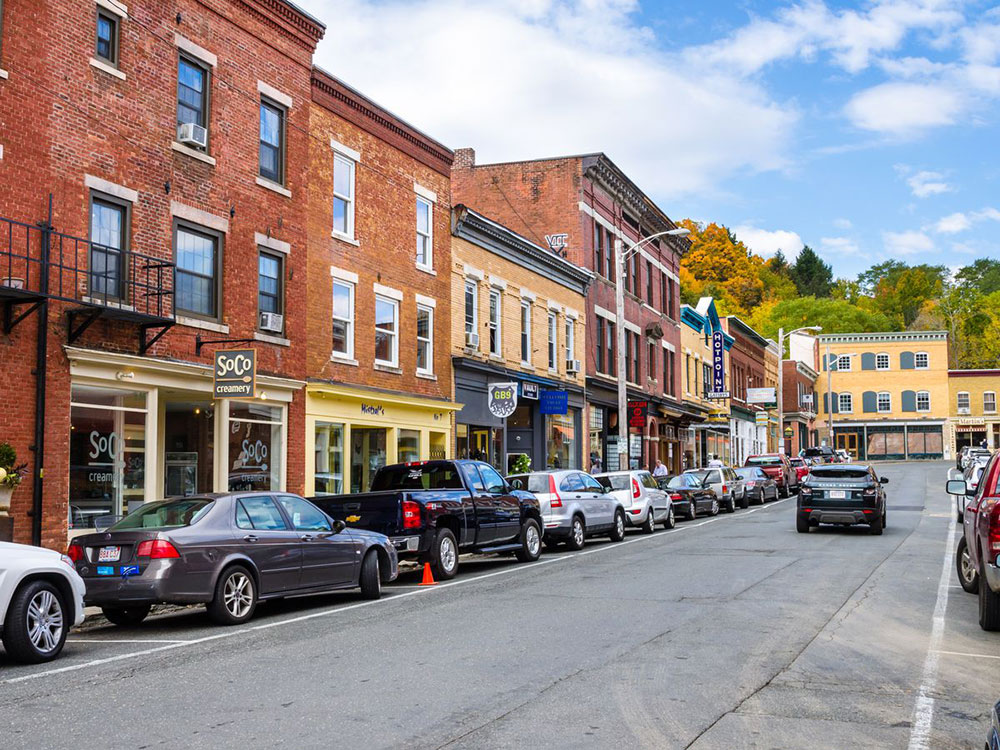
Concord’s historic town center is another major attraction. Concord Center features beautifully preserved colonial-era buildings, independent shops, restaurants, and cultural sites. Landmarks such as The Old Manse, Orchard House (Louisa May Alcott’s home), and Sleepy Hollow Cemetery—where several famous authors are buried—highlight the town’s rich cultural history.
Education and community life are central to Concord’s identity. The town is known for its excellent public schools and strong civic engagement. Concord residents are also deeply committed to land conservation; a large portion of the town’s land area is protected as open space, conservation land, or historic property.
Outdoor recreation is a defining feature of Concord. The town includes miles of walking trails, scenic rivers, and conservation areas. The Concord River, which flows through the town, is popular for canoeing and kayaking. In addition, the surrounding fields and woodlands offer a landscape that has changed little since colonial times.
An interesting tidbit about Concord is that it played a role in the early American pencil industry. In the nineteenth century, local entrepreneur William Munroe began producing pencils in Concord, helping establish one of the first pencil manufacturing businesses in the United States.
Today, Concord blends historic importance with modern suburban living. Its combination of Revolutionary landmarks, literary heritage, beautiful natural landscapes, and strong schools make it one of the most distinctive and desirable communities in the greater Boston area. For many residents and visitors alike, Concord represents the essence of historic New England.
Sorry we are experiencing system issues. Please try again.